
Return to Soccer After ACL Reconstruction Surgery
A question I get a lot (and something I’m personally going through too!) is: “How do I safely return to soccer after I’ve rehabilitated from my ACL reconstruction?”
This is a great question and a very complicated one to answer. First things first is to recognize that we are all unique; your return to play decision-making will be different from mine. That can include the time to return to play, what activities are being undertaken, what position are you returning to, what level of play are you returning to, how much time do you have to train, etc.
Let’s assume that for the first 6 months post-op, you’ve been adherent to your physical therapist’s home exercise program. You’ve been working hard on restoring your normal range of motion and strength with functional movements. Your pain is well-controlled (or hopefully non-existent!) and your confidence and trust in the knee are slowly improving. But does this mean you’re ready for the demands of a three-dimensional sport like soccer?
NO!!!!!
The only thing worse than tearing your ACL is doing it a second time. So we need to make sure you are successful in the confident completion of the following before we can better make the return to play decision:
1. No pain or swelling
2. No range of motion deficits
3. Quad, hamstring, and glute strength in the operative leg is at least 95% of the non-operative leg
4. Single leg balance on unstable surfaces must be strong (can you stand one legged on a soft BOSU balance and volley the ball back to your partner 5+ times?)
5. Cardiovascular fitness is not a hindrance (for example, depending on your level of play, can you run 3 miles at an 8 min/mile pace? How well are you able to complete the Yo-Yo Test?)
6. Double one-legged hop test within 90% of the non-operative side (standing on the left leg, can you hop forward twice in quick succession and stick the second landing on the left, without the right leg touching the ground? Measure this distance, then repeat on the right side)
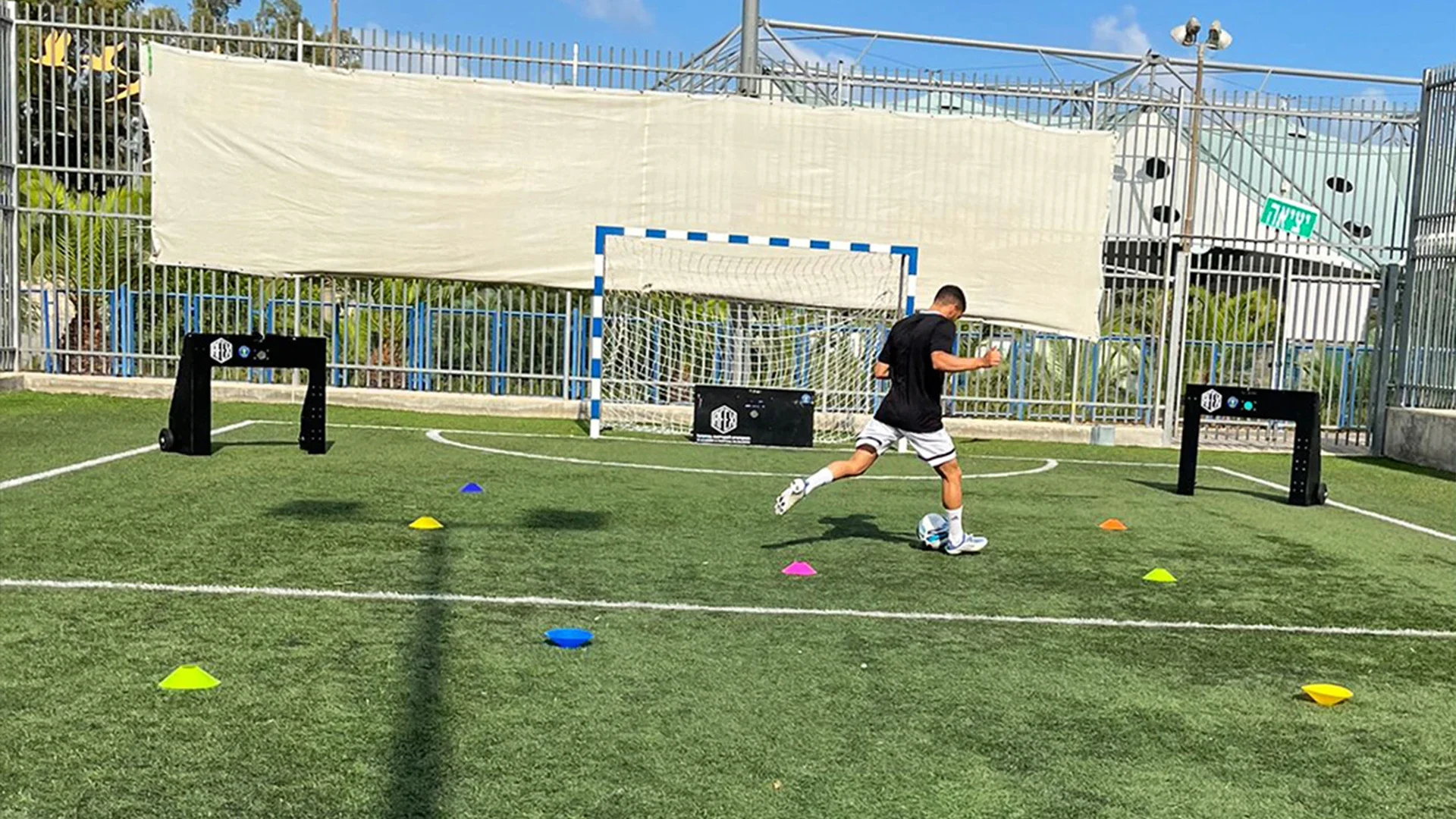
If these above criteria are met, you’re probably ready to engage in the next steps:
1. Passing, including varying speeds, techniques (instep vs laces), heights, long balls, etc
2. Shooting, including varying speeds, techniques, and distance from goal
3. Blocking shots (can you compete for 50-50s where both players kick the ball from opposite directions at the same time?)
4. Landing mechanics when competing for headers. For example, if you’re going up for a header and get bumped, can you confidently land on your operative side with safe biomechanics?
5. Dribbling, including changes of directions, drag-backs, Cruyff turns, cuts, chops, etc and at a variety of speeds. Can you do this with your eyes open or do you need to look at the ball 100% of the time?
6. Interval runs, including straight-line sprints (6-18-50s), diagonal runs (chasing down the ball in a forward press), agility runs, changes of direction, velocity modification, etc.
If you’re able to confidently complete all of the above criteria, you’re approaching return to play. From there, you then often resume non-contact training, then full contact training, then eventually get some match play minutes in from a substitute role, before eventually returning to play fully. This is sometimes harder to manage as an adult athlete, since most adult league teams don’t practice much, if at all.
Given that it often takes 9-12+ months to properly rehabilitate from an ACL reconstruction, and given how frequently folks return before they’re ready and thus retear their ACL (or the other one!), you need to take your time and be honest with yourself! If you don’t feel physically or psychologically ready, you must address this before returning to play.
Yes, I understand time away from your sport is difficult. But as we say here at Premier Physical Therapy, we want to get the job done the first time around. I’d rather spend an extra couple of weeks dotting our Is and crossing our Ts to ensure you have the best environment to return to, rather than hearing everybody’s four favorite words: “I told you so.”
This is complicated! Don’t be afraid to ask for help. In the words of Brené Brown, “Vulnerability is not weakness; it is our greatest measure of courage.”