
I’m writing this post the evening of Monday, April 20th, 2026. A special day here in Boston, given today was the 130th running of the Boston Marathon!
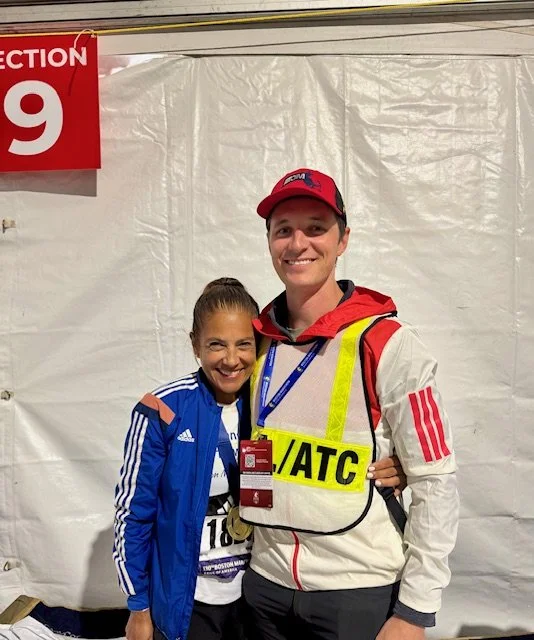
It was such a fun day today. It was my 13th consecutive time volunteering as a medical volunteer at the finish line of the Boston Marathon, and my 4th consecutive Boston Marathon as the athletic trainer team lead in our finish line medical tent.
For our 32,000 runners, we had 3,500 medical volunteers. I was responsible for the 33 athletic trainers in our tent, making sure we treated each and every runner with the best possible care throughout the day. I’ve got a few stories from today, and I’m sure more will come as the time for more reflection arrives.
My one big lesson from today, however, is the importance of priority management!
For context, when runners approach the entrance of our finish line medical tent, they are triaged into Green, Yellow, or Red. Green indicates mild impairment (basic complaints with a time for treatment under about 30 minutes). Yellow is more extensive than Green. Red indicates they are in rough shape and should be seen in our Intensive Care Unit. We try to triage athletes mostly into Green and Yellow categories, unless they truly need the ICU. If they are categorized as Green or Yellow, they go to one of the 150 beds in our tent to be treated. If they are categorized as Red, they proceed to our one of our 10 ICU beds.
As you can imagine, we want to keep the ICU as open as we can because these folks need a lot of care (EKGs, IV bags, Bair Huggers, possible EMS transportation to the hospital, etc) and if those beds are occupied by someone who doesn’t need that care, then they are potentially taking away from their fellow runners who need more help.
Today the weather was partly sunny and about 40 degrees. We had many, many cases of patients with hypothermia (low body temperature) with your classic signs and symptoms, including shivering, blue lips, drowsiness, low body temperature, etc.
So fast forward to priority management: we had a triage healthcare provider at the entrance of the tent who was unintentionally misclassifying shivering, hypothermic runners as “convulsive.” When we heard the word convulsive, we think of seizures and that is rightly classified as Red, and thus in need of the ICU before likely transportation to the hospital.
This happened at least 3 or 4 times that I can recall. As a result, the ICU filled up extremely quickly early in the day. But most of the patients occupying the ICU were not appropriate for the ICU; they just needed to warm up from their hypothermia! They could have easily done with from one of our other 150 beds.
We quickly addressed this issue and it was not a problem for the remainder of the day fortunately. The solution here came from a conversation I had with this person about protocol and future communication, but that’s what leadership required in this circumstance.
Sometimes I wonder if I’d be better off treating patients all day again, like I did for the first 9 Boston Marathons I did. Truthfully, it’s more fun and exciting to celebrate these athletes and help them feel better. But these individual interactions only happen successfully if the logistical work is running smoothly behind the scenes. So perhaps I’m best utilized doing what I’m doing now. Who knows!
So use this as an opportunity to evaluate your own priority management. Are you prioritizing the items at home, work, school, etc that you should be, or are you spending too much time on the mundane, nonessential tasks when you could be working on the things that help with smooth operation and quality of life? How can you be better tomorrow?
Food for thought. Thanks for reading!